
What Is the Difference Between Aluminium Formwork and Timber Formwork?
In the construction industry, formwork plays a crucial role in shaping concrete structures during the building process. Two popular formwork options used by contractors and builders are aluminium formwork and timber formwork. Each method has its own set of advantages and considerations. In this article, we will explore the key differences between aluminium formwork and timber formwork, providing you with insights to help you make an informed decision based on your construction needs.
What is Aluminium Formwork?
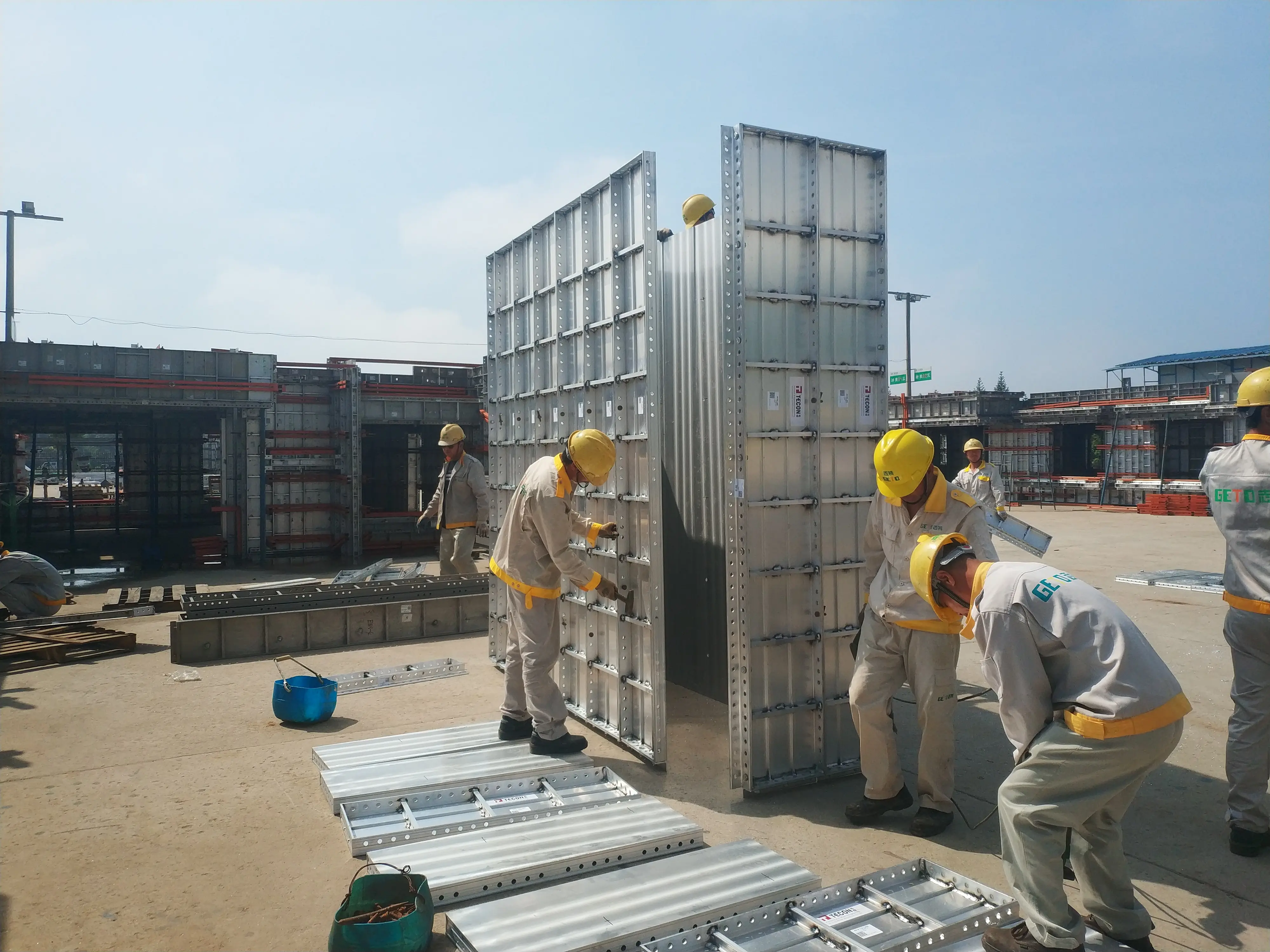
Aluminium formwork is a modern construction technique that utilizes lightweight Aluminium panels to create temporary molds for pouring concrete. These panels are designed with precision and are highly durable, allowing for multiple reuses. The aluminium formwork system consists of interlocking panels that can be easily assembled and dismantled, making it efficient and time-saving. Its versatility allows for customization to suit various shapes and sizes of structures.
Advantages of Aluminium Formwork
- Durability: Aluminium formwork is known for its excellent strength-to-weight ratio, making it sturdy and long-lasting. It can withstand the pressures exerted during the concrete pouring process and can be used for multiple construction projects, resulting in cost savings in the long run.
- Efficiency and Speed: The interlocking design of aluminium formwork panels enables quick assembly and disassembly, reducing construction time significantly. The system also eliminates the need for extensive support structures, enhancing productivity and efficiency on-site.
- Quality Finishes: Aluminium formwork provides smooth and uniform concrete finishes, eliminating the need for additional plastering or finishing work. This results in time and cost savings, as well as a visually appealing end product.
Disadvantages of Aluminium Formwork
- While aluminium formwork offers many advantages, it’s important to be aware of some key limitations:
- Limited Flexibility: Aluminium is harder to modify on-site, which can be a drawback for projects requiring customized or complex designs.
- Stability Concerns: Its lightweight nature can lead to reduced stability in windy conditions, posing safety risks during construction.
- High Initial Cost: For small or simple projects, the upfront cost of aluminium formwork may not be justifiable despite its reusability.
What is Timber Formwork?
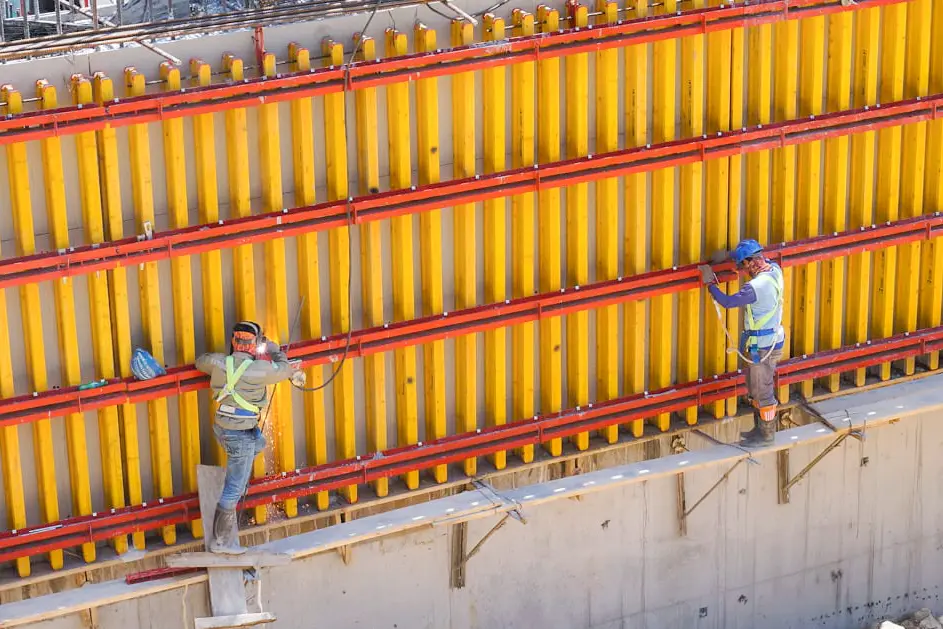
Timber formwork, also known as traditional formwork, involves using timber panels or plywood to create temporary moulds for concrete pouring. This method has been widely used for decades and is still popular due to its availability and affordability. Timber formwork is suitable for various types of construction projects, including residential, commercial, and industrial buildings.
Advantages of Timber Formwork
- Cost-Effective: Timber formwork is generally more economical compared to aluminium formwork, especially for smaller construction projects. Timber materials are widely available and cost-effective, making them accessible to contractors with budget constraints.
- Flexibility: timber formwork can be easily customized and cut on-site, allowing for adaptability to various shapes and sizes of structures. It offers versatility in accommodating unique design requirements or irregular layouts.
- Natural Insulation: Timber possesses natural insulating properties, which can help regulate temperature and reduce energy consumption. This can be advantageous in areas with extreme climates, as it contributes to the overall energy efficiency of the building.
Disadvantages of Timber Formwork
Despite its undeniable strengths, there are also some qualities that may fall short with this type of formwork. These include:
- Limited Durability: Timber deteriorates quickly with repeated use and lacks the longevity of materials like steel or plastic.
- Poor Water Resistance: Dry timber can absorb moisture from wet concrete, weakening the final structure during curing.
- High Moisture Content Issues: The timber with moisture content over 20% is prone to shrinkage and deformation (warping, twisting), which can compromise construction quality.
Differences Between Aluminium Formwork and Timber Formwork
| Aspect | Aluminium Formwork | Timber Formwork |
| Cost Efficiency | Low long-term cost due to high reusability | Low initial cost; suitable for small-scale or one-off projects |
| Reusability | High —offers long-term cost savings | Limited – prone to wear, damage, and moisture |
| Water Resistance | Good; resists water and provides consistent performance | Poor; absorbs moisture from concrete, weakening both timber and concrete |
| Environmental Impact | Recyclable and long-lasting, but energy-intensive to produce | Renewable and biodegradable, but short lifespan leads to more waste |
| Construction Time | 20–30% faster due to easy assembly and disassembly | Slower – more time needed for setup and removal |
| Maintenance & Storage | Minimal maintenance, lightweight, easy to store | Requires regular care, dry storage to avoid rot and damage |
| Best Use Case | High-rise or large-scale projects needing speed, consistency, and durability | Small-scale or irregular projects with lower budgets |
- Construction Time: Aluminium formwork is known for its speed and efficiency, enabling faster construction progress compared to timber formwork. The interlocking panels and easy assembly process of aluminium formwork save significant time during the construction phase.
- Reusability: Aluminium formwork is highly reusable, offering a cost-effective solution for multiple projects. Timber formwork, on the other hand, may have limited reuse potential due to wear and tear, especially in high-stress areas.
- Maintenance and Storage: Aluminium formwork requires minimal maintenance and can be stored easily due to its lightweight nature. Timber formwork, however, needs regular maintenance, such as cleaning, treating, and storing in a dry environment to prevent rot and deterioration.
Choosing the Right Formwork for Your Construction Project
Aluminium formwork offers durability, efficiency, and high-quality finishes, making it ideal for large-scale projects. Timber formwork, on the other hand, is cost-effective, flexible, and provides natural insulation properties. The choice between the two ultimately depends on your specific project needs
Project Size
Aluminium formwork is best suited for large-scale, repetitive construction such as residential towers or commercial buildings. Its modular design allows for quick setup and uniformity. Timber formwork, on the other hand, is more flexible and easier to shape, making it ideal for custom or small-scale projects with irregular geometries.
Durability and Reusability
If your project demands a high number of reuses, aluminium formwork is the better investment. It’s highly durable and resists warping or damage even after multiple uses. Timber has a shorter lifespan and is more prone to wear and moisture damage, but it’s easier to adapt and repair on-site.
Cost
Aluminium formwork involves a higher upfront cost but provides better long-term value due to its reusability and faster assembly time. Timber is more affordable initially, but frequent replacement and higher labour needs can increase costs over time—especially on larger projects.
Surface Finish Quality
If a high-quality surface finish is a priority, aluminium formwork delivers a smooth, consistent result that often eliminates the need for plastering. Timber formwork may leave slight surface marks or require additional treatment to meet aesthetic standards.
Not sure which formwork material is right for your project? TECON is here to help. From high-strength steel and lightweight aluminium to cost-effective timber and durable plastic, TECON provides a wide variety of formwork systems tailored to different applications and environments. As a professional formwork manufacturer in China,we also offer custom solutions to fit your specific requirements. Contact us today for expert advice and a free quote!
In this blog